<div align="center"><a href="http://enchantedhomeschoolingmom.org/poppins-book-nook-virtual-book-club-kids/" title="Poppins Book Nook"><img src="http://enchantedhomeschoolingmom.org/wp-content/uploads/2014/12/Profile-Image.png" alt="Poppins Book Nook"style="border:none;" /></a></div>
Wyning Academy Donations
If you would like to help our homeschool with supplies, field trips and extracurricular activities please feel free to make a small donation! You can also help by utilizing my affiliate links on the right.
*This post may contain affiliate links. Please see my
Disclosure Page for details.
First off I want to wish everyone a happy and safe 4th of July. Do you have any exciting plans this weekend? We are going on a camping adventure with some friends and visiting another one of a kind camping destination in Georgia (don't worry I will share all about it when we return). Remember you can follow us on our fun adventures by checking in with us on Instagram and Facebook.
We have all kinds of fun activities lined up for the weekend like learning how to tie the different types of knots, making para-cord bracelets, playing board games, geocaching, and going on scavenger hunts. So today I decided to make up my own nature scavenger hunts and share them with you.
Download the nature scavenger hunt here, or click the photo below.
Download the fungus scavenger hunt here, or click the photo below.
For more fun, FREE downloads including nature journal pages (leaf, arachnid, flower, etc) and fieldtrip/road trip worksheets (letter game, travel journal page, road trip scavenger hunt) visit my freebie page.
Do you have any camping trips planned this year? I'd love to hear more about them post a comment below. You can also tag us on instagram (@kbalman or use hashtag #2015campingfun) or share a photo on our Facebook page.
*This post may contain affiliate links. Please see my Disclosure Page for details.
About a week ago I had my first homeschool nature journal club meeting for the North Metro Atlanta area. This has been something I have wanted to do for quiet sometime, but have always been too nervous to start. Well I finally took the plunge and the first meeting was fabulous. Nature journaling is something that myself and my children are really passionate about and we have been nature journaling since we started homeschooling in 2011. I wanted to share the joys and importance of nature journaling with other families and so Homeschool Nature Journal Club - Metro Atlanta was created. I will try my best to share each of our monthly meetings on my blog in hopes that it encourages you to start nature journaling with your children or perhaps even start your own club.
First let me tell you how to create a nature journal club group for those that are interested then I will tell you more about our first meeting topic and share exactly everything we covered and the resources we utilized.
Staring a nature journal club:
It is really not as hard as it sounds. I created the group on Facebook, because for me that is the easiest way to communicate with a large group and post events. I decided to offer meetings for the entire North Metro Atlanta area (which includes Cherokee County, Cobb County, Fulton County, Gwinnett County and more), but you can make it for a smaller region if you want, like just your city or county. I offer two meetings a month and because my group covers multiple counties I offer one on the west side and one on the east side to try to accommodate everyone. In the past I have arranged nature walks with another group I am in and was very disappointed when the day of the nature walk no one or only a couple of families showed. I felt like all my hard work had been for nothing. So with this new, larger group I charge each family a small fee from $5-$7. This basically pays for my time and any supplies I may need for the meeting (like handouts, craft materials, books, etc).
For each meeting I pick a topic and different location so families can get exposed to a variety of nature preserves, parks, etc. Some of the upcoming topics include squirrels, GA birds, mushrooms, worms, pine cones and conifers, macroinvertabrates, spiders and more. At each meeting I talk about the topic, read a book, provide a drawing demonstration, have some sort of hands on activity and then we hit the trail for nature journaling.
For the first meeting I covered what nature journaling is, the reasons why nature journaling is so important, as well as what type of information to put in a nature journal. Be sure to view and download my nature journaling 101 handout.
Of course it is very important to give families a list of the supplies they will need to bring to nature journal club.
What to bring to each meeting:
Writing utensils (coloring pencils, crayons, etc)
A blank nature journal - it basically needs to have a blank page/spot to draw. If it has some lines to write that is fine. (see below for recommendations)
Nature Log -Targeted for children, ages five to twelve, Nature Log Kids is a journal that lets youngsters note encounters with nature. Pages to paste photos and artwork add a perfect blend of creativity to each and every entry.
Guided Nature Journal - No one could describe Nature Journal as a blank book. Clare Walker Leslie has transformed what could have been an ordinary diary into something truly unique. The text and illustrations offer just the right amount of inspiration and guidance to help the journal-keeper begin and succeed at making this book his or her own.
Standard Journal - This stylish journal is a must-have for everyone, from artists and students to writers and professionals! Featuring a natural cork cover that's soft to the touch, this unlined blank book is ideal for note taking, sketching, doodling and more.
1st Club Meeting - Squirrels:
Our first meeting was fantastic and my heart jumped for joy when I read the comments parents posted afterwards on the Facebook group.
My non-writing, non-artistic child today enjoying our first nature journaling meet up. He actually took notes about what was being taught and drew a few pictures! We are really going to love this new group! It's all about finding what they love. Stacy Thank you for a great morning. The nature journaling is going to open a lot of doors for us. We look forward to next month! Stephanie I heard great things, so glad my husband was able to take them! Looking forward to the next one and meeting you all. Thanks for putting these things together! Sarah After I covered the nature journaling 101 information I introduced the children to the KWL chart. We discussed what they knew about squirrels, what they wanted to learn and hopefully later they discussed all they had learned with their parents. Since we are unschoolers we use KWL charts a lot.
After the KWL chart I read some interesting squirrel facts to the children. While reading the facts though I worked in some questions, like "what is a mammal," and "what is an herbivore." This helped keep the children involved and interested.
After we covered the facts I asked if anyone had any questions. The weather was a bit chilly so we didn't get around to reading the book I had planned to read, Burgess Book of Animals for Children.
So I passed around the red squirrel skull I purchased on Ebay and showed the children how to tell that squirrels are rodents (long orange teeth). They all really loved the skull!!
I then showed the children how to draw a really simple squirrel. This YouTube video was a great help.
After the drawing lesson I verbally gave the children a list of questions to think about as they observed the squirrels (these were taken out of the Handbook of Nature Study book). Then I handed out little cups of birdseed and gave them each a little squirrel ornament goodie for being so well behaved. I also encouraged them to do journal entries in between our meetings and told them at the next meeting I will ask for volunteers to share some of their entries.
Then we hit the trial! During our walk we didn't see many squirrels...can you believe it. Luckily though most of the children said they have squirrels in their backyard so they promised to go home and watch the squirrels in their yard. We did all sit down though to create journal entries. Some children journaled about squirrels, others journaled about other things like trees and birds.
The first meeting was tons of fun and I am looking forward to so many more fun nature journal club adventures. I hope this post inspires you to get your children outdoors!
*This post may contain affiliate links. Please see my Disclosure Page for details.
We had tons of fun with the Poppins Book Nook blog series last year and we will be continuing that fun all throughout 2014. This month's theme was, "The Great Outdoors." Keep reading to learn more about the book we read, fun craft we made and to grab your FREE journal page. There is also a giveaway is at the end of the post! To check out all of our past Poppins Book Nook posts click here.
Books: This month we choose a book off of our our bookcase called The Kids Wildlife Book. I picked this book up at Goodwill a several weeks for 75 cents. I knew it would become a favorite for my nature loving children. It is filled with information about the wildlife of North America including bats, opossums, bison, owls, toads and more. The book provides fascinating information, remarkable experiences, and unforgettable tales that dispel myths, encourage understanding and delight children. There are over 100 learning experiences that use science, language arts, nature, math, art and crafts to explore more animal lives and habitats. The book is geared towards children ages 4-10 yrs old.
Craft Project:
Here is the fun project we did to go along with this months theme.
Marsupial Pouch:
This craft is quick and easy to make. Afterwards children will have a cute pouch that they can use to collect things in on their next outdoor adventure!
*This post contains affiliate links. Please see my Disclosure Page for details.
Spring is finally in the air! This will be our first Spring and Summer with a backyard and we are just a tad bit excited. I am pretty sure I will loose my children for hours each day, but luckily they are exploring and learning so I don't mind. With the nature bag in hand they set out to learn about bugs, birds, bunnies, squirrels, rocks, minerals, trees, leaves and more. They set traps, try to start fires (I'm very happy they haven't succeeded yet), go on archaeological digs, climb trees, build tents and play with animal friends.
So have you been watching the birds get ready for Spring in your backyard? For the past couple of weeks we have been having a blast watching them. We have a sliding glass door leading to the backyard so we can sit at the kitchen table and easily watch the birds, chipmunks, squirrels and bunnies eat from our bird feeder. Armed with our trusty nature apps from Audubon we are always ready to learn about our backyard animal friends. We have seen Cardinals, Brown Thrashers, Blue Jays, Carolina Wrens, Woodpeckers and a few others so far this year.
Here is a video that I finally finished editing, it's from last Summer. We had the privileged to watch a Carolina Wren family build their home, lay their eggs and send off 4 little baby Wrens into the World.
For more great bird nature study resources check out my previous bird posts and Audubon.
*This post contains affiliate links. Please see my Disclosure Page for details.
If you have homeschool FreeBEEs to share
please link up at the bottom of this post!
You can copy the button from my side bar.
Each month Jen, from Gricefully Homeschooling,and I host a freebie link up called Homeschool FreeBEE Fridays. The blogger link up will start on the first Friday of every month and end on the first day of the following month. Each month there will be a new link up. Check back next Friday for an amazing, limited time, special freebie from on of our Homeschool FreeBEE Friday Sponsors. View all my FreeBEE posts here!
FreeBEEs:
Do you have any little geologists? My kids love rocks. We recently moved into a rental house and now have a yard, yay! Well in the back corner of the yard is a retaining ditch which the children have turned into their personal excavation site. They don't find anything too exciting but they have tons of fun digging in the GA clay finding large pieces of quartz and granite (the two most common rocks in GA). This week we decided to explore rocks a little more closely. We were supposed to have a Rock Nature Club hike but due to the rain we had to cancel it. So we spent the day exploring the children's rock collections. Armed with some of the helpful resources below, our rock collections and helpful tools (magnifying glass, nail, penny, piece of glass, measuring tape, magnet) we were ready to get to work. We had lots of fun and covered science, history, geography, math, reading and writing in 2 hrs.
So here are 10 awesome rock resources for your little geologist!
1) I made this Rock Observation Journal page for my children which you can grab for FREE by clicking the link or photo below.
*This post contains affiliate links. Please see my Disclosure Page for details.
We are having lots of fun with the Poppins Book Nook blog series. This month's theme was Seasons. We decided since Fall has arrived here in Georgia to focus on that as our season. Fall is one of our favorite seasons, Spring is the other. Keep reading to learn more about the 4 great books we read, fun leaf experiment, leaf journal page and art project too. The giveaway is at the end of the post!
Fall Leaf Observation Journal Page:
I have been on a journal page making kick lately. I'm sure you can find similar ones all over the internet but my kids love it when I make special ones just for them. So I made this Fall Leaf Observation Journal Page. Download your copy here or click the picture below.
We decided it would be fun to see what trees were in our own neighborhood so we collected leaves from the backyard and our neighbors front yards. We read our books and learned all about leaves then we did some close up observing.
Pigment Science Experiment:
We had a blast learning about leaf colors with this science experiment. It was very simple to do and really helped explain ALL of the different chemical's that make up the various leaf pigments.
Chlorophyll - Green
Xantholphyll - Yellow
Orange - Carotene
Reds/Purples - Anthocyanin
Brown - Taninn
Supplies:
-Leaves - we used green, yellow, red and orange -Jars -Rubbing alcohol -Coffee filters -Hot water
-Pot
What to do:
1. Tear a leaves into little pieces and put them into separate jars. We
used a variety of leaf colors. 2. Cover the leaves with an inch of rubbing alcohol. 3.Using a wooden spoon to grind the leaves into the alcohol. 4. Lightly put the lids back onto the jars. 5. Place the jars into a pot with 1 inch of hot water. I put ours on the stove for a few minutes to make sure the water was nice and hot. 6. Leave the jars in the pot for 30 minutes or more. Swirl the leaves and
alcohol every 5 minutes and add more hot water as necessary to keep the
temperature up. 7. After the 30 minutes your kids should notice that the alcohol is tinted. Place
coffee filter strips into the jars so that the tip of the filter just
touches the alcohol. Bend the other end over the edge of the jar so the
filter strip doesn't slip. 8. Leave the strips in place overnight. You may be able to take them out sooner but we discovered the longer they stayed in the stronger the pigment was on the filters. Remove the strips and
let them dry. You should be able to see a strip of pigment on
each filter.
My kids decided to take the experiment one further and wanted to see if they could paint with the pigments they had extracted. To my surprise it did work a little bit.
Art Project:
We had a blast recreating our leaves with oil pastels and watercolor. Even I had to join in on the fun! Don't they look fabulous?
What to do:
1. Have kids pick a leaf and trace around it with a crayon or oil pastel onto their paper.
2. Next add the leaf veins with the crayon or oil pastel. Don't forget the stem as well.
3. Using watercolors have your kids add color onto their leaf. Encourage them to layer the colors and experiment with using different amounts of water to adjust the darkness of the watercolor.
4. Sign your beautiful work of art!
The kids also decided it would be fun to do leaf rubbings too!
NEW! Every month the Poppins Book Nook group will be offering readers a chance to win a brand new storybook that ties in with our theme for the month. This month one lucky winner will win a copy of Four Seasons Make A Year. The winner must reside within the United States. Just enter the Rafflecopter below to win:
*This post contains affiliate links. Please see my Disclosure Page for details.
Last week we had a blast with some families from our homeschool group on our very first homeschool nature club hike. The topic of the hike was Arachnids! The children ranged in age from 2 - 10 and all of them had a blast.
I told all of the children to look high and low to find spider webs during our hike. When they found one they gave a yell, "I found one," and we would all take a few moments to observe the web and spider. I even caught a few spiders so the kids could observe them up close. We found lots of Orb Weaver spiders and lots of Daddy Long Leggers (though they are not part of the spider family). Periodically we would take a little break so I could tell the kids a few spider facts.
10 Awesome Itsy Bitsy Spider Facts:
1) Spiders are not insects,they are arachnids.
2) Spiders have only 2 body segments, 8 legs and no antennae.
3) Spiders eat mostly insects, but some even eat small frogs or mice.
4) In GA we have only 3 dangerous spiders: Brown Recluse, Brown Widow and Black Widow.
5) Spiders art part of the Anthropod classification.
6) Thanks to spiders scientists have been able to tougher materials for bullet proof vests.
7) Spider silk = 253,816 PSI
8) The Goliath Birdeater Tarantula of South America is the largest spider in the World.
9) ALL spiders have fangs! And, almost all have venom in them. Lucky for us, most spider venom cannot harm us because it is quite weak.
10) Spiders spin about 65 yards of silk a day and live for three years. So they spin about 71,175 yards in their lifetime.
Pajama Day- Monday, September 23rd -Sponsored by CurrClick
Homeschool Away from Home Day – Tuesday, September 24th - Sponsored by iHomeschool Network
Crazy Hairstyle Day – Wednesday, September 25th - Sponsored by Hip Homeschool Moms
Volunteer Outside Your Home Day – Thursday, September 26th - Sponsored by Great Homeschool Conventions
Super Hero Day – Friday, September 27th - Sponsored by Free Homeschool Deals
Need something inexpensive, educational and fun to do for Homeschool Away From Home Day?
Go Geocaching!
Are you looking for a fun, educational family activity? Something that will get you outdoors and take you on an adventure? Then keep on reading to learn more about Geocaching. So what’s Geocaching? Geocaching is treasure hunting using a GPS unit. Caches (the “treasure”) can be found all over the World. They can be at your local park, at the end of a long hike, underwater or on the side of a city street.
How do you get started? To get started locate caches near you by creating a free account on the Geocache website. Make sure you also read the Geocaching 101 page too. The Geocache website helps you locate the 6+ million caches worldwide. You can search by city, state, address, longitude, latitude, name etc. Once you do a search you will be able to see a list of all the caches near your location in both a list and map format. You can also view further details about the caches including: cache names, difficulty, cache size, cache type, date last found, date placed, etc. Click on the cache you want to go hunting for to view further details, clues, logged visits and more. Feel free to add us as a friend we call ourselves the balman4! One of our Geocaching goals is to complete all the GA state park caches. There are 50 state parks and 14 historic sites that participate. Your state parks may also participate; just visit your state parks website or contact them to find out.
Next get a GPS unit. We use one on my cellphone that I downloaded for free. I have an Android phone and really like C:Geo App. There are also several apps you can purchase like the official Geocaching.com App which is $9.99 (available for iPhone, Android, Windows 7).
Other options are purchasing a handheld GPS for around $100 on Amazon. Or using your portable car GPS. We used our TomTom before, and it worked fine. Just make sure that the battery is fully charged and that you change the settings to walking instead of driving. Sometimes I print out the Geocaches information from the website to have as a back up just in case something happens to our GPS unit. And we also always have an old fashioned compass just in case. Next download or manually enter the coordinates into your device. You are now ready to set out on an amazing adventure to find a hidden treasure. Your GPS should guide you right to the Cache or at least get you in close proximity to it. If you're stumped you can look at the clues and photos from the previous logged visits on the Geocache’s detail page to help you (I still have to do this sometimes). You will need to think outside of the box. Remember these are hidden treasures. The people who hide them do not want them to be easily found by Muggles (term used to describe Non-Geocachers). Many times you will need to think creatively. When you are in the area where the Cache is hidden start looking for spots that look like good hiding spots like under rocks, inside tree cavities etc. Also look for off beaten paths that may have been created by previous Geocachers. And finally, make sure you log your find on the Geocaching website. The people who created the cache love to read about people who have found it. So what's in the cache? All kinds of cool stuff!!! What treasures you will find inside really depends on the container type and size. My kids have gotten stickers, small toys, pens, pins, etc. The GA state parks require the use of a green ammo box, and this is what most cache creators use because it is camouflaged and waterproof. Inside each cache is generally a log book (which you will want to sign) and sometimes various trinkets that others have left behind. If you wish to take a trinket (which my kids always do) you will need to replace it with a trinket of greater or equal value. There may also be trackables like our Homeschool Pinocchio, who is traveling the globe right now! We recently just found our first Micro Cache. These Caches are about 2 inches in length and can be very hard to find (like a 35mm film canister). There are also EarthCaches, Mystery/Puzzle Caches and Geocaching Challenges (we have completed 10 of these). You can read more about the types of Geocaches here. Depending on the Cache adventure you're choosing make sure your prepared and take plenty of sunscreen, bug spray, water, snacks, first aid kit and definitely a camera. Oh, and of course your GPS!
How can you make it educational? Geocaching is the perfect opportunity to get your children out for an
adventurous field trip. It covers so many subjects (including PE) and
can be an excellent learning experience. Each time we go on a Geocache
we discover new exciting things. We have learned about insects,
waterfalls, birds, rocks, Indians, compasses, GPS's, rivers, mountains,
flowers the list goes on.....be sure to read more about our nature studies! Both of my children draw pictures and write in their journals about the many fabulous things we experience during our trips. After a Geocache adventure you can go home and continue the learning with some fun unit studies or lapbooks that go along with the various things you explored on your journey. There are tons of great items on CurrClick to help you get started like this FREE Spider Mini Helper, Flowers Lapbook ($1.00) and Rock and Minerals Unit Study ($2.99).
And that's it! You are now ready to experience an awesome adventure with your family and friends. To find out more about Geocaching make sure you also follow Geocaching.com on Facebook and Twitter. Links to follow to join the fun:
If you go on a Geocache adventure after reading this post please come back and leave a link to the cache you found and let me know what you thought of this fun, educational, family activity!
*This post contains affiliate links. Please see my Disclosure Page for details.
Spring and Summer = BABIES!
Everywhere we look new life is emerging.
About 4 weeks ago I wrote about Investigating Nature. In the post I had mentioned the Carolina Wrens that built a nest on our balcony in an ice cream pail. Over the last 4 weeks we have been watching and observing them. It took them several days to build their beautiful dome shaped nest. They very carefully placed each leaf and twig to make it the perfect home for their babies. They didn't seem to mind us watching out the window (which made us very happy).
After the nest was built we kept an eye on it, patiently waiting for eggs to hopefully arrive. A few days later there were 4 little cream eggs with brown speckles. We took a peek at them, being very careful to not disturb the nest. Mamma bird was very diligent and did a fabulous job taking care of her eggs. She made sure they were nice and warm and didn't mind us checking in occasionally on her and taking some pictures. About 13 days later 3 little fuzzy pink and grey babies were hatched. Yes sadly one of the babies did not make it. The kids were in complete awe of these new little lives. They grew quickly and each day we could see changes taking place. First their eyes opened. then they began developing feathers. They constantly cried for food and their parents did a great job of going back and forth with food. We noticed that their was one baby who was larger and more dominant than the others. Yesterday, about 11 days since they hatched, the first baby (the dominant one) left the nest and entered the World. We saw him outside of the nest on the ledge of the container and by the time I grabbed my camera he was off. The kids got to see him take his first flight! It was a fabulous experience for our entire family!
**Continue reading the rest of this post here and don't forget to join Wildlife Wednedsay on Creation Conversations to download your FREE nature resourceslike the science observation worksheet.**
Link Up:
Don't forget about the ongoing link up where you will be able to link your creation exploration posts to share with others. It will become another avenue full of resources and ideas to enrich your homeschool.
Copy and paste the Wildlife Wednesday badge and place it in the post you are linking up or on your sidebar. Text links are fine to include in your post as well use this permalink: http://www.creationconversations.com/group/wildlife-wednesdays. Posts that are linked up may be pined to Pinterest. Please make sure you post the direct URL and not the URL to your homepage.
Grab a Wildlife Wednesday badge for your blog/website:
*This post contains affiliate links. Please see my Disclosure Page for details.
I is for Investing nature!!
Do your kids love investigating nature? Mine do. And Spring is a great time to start. New life is springing up everywhere. Bees are buzzing, flowers are blooming, birds are nesting and butterflies are emerging. So get your kids outdoors and do some investigating.
Right now we are investigating the Carolina Wrens that are building a nest on our balcony in a 1 gallon ice cream pale and the Eastern Tent Caterpillar that is currently in his cocoon in our butterfly habitat.
**Continue reading the rest of this post here and don't forget to join Wildlife Wednesday on Creation Conversations to download your FREE nature resourceslike the science observation worksheet.**
Link Up:
Don't forget about the ongoing link up where you will be able to link your creation exploration posts to share with others. It will become another avenue full of resources and ideas to enrich your homeschool.
Copy and paste the Wildlife Wednesday badge and place it in the post you are linking up or on your sidebar. Text links are fine to include in your post as well use this permalink: http://www.creationconversations.com/group/wildlife-wednesdays. Posts that are linked up may be pined to Pinterest. Please make sure you post the direct URL and not the URL to your homepage.
Grab a Wildlife Wednesday badge for your blog/website:
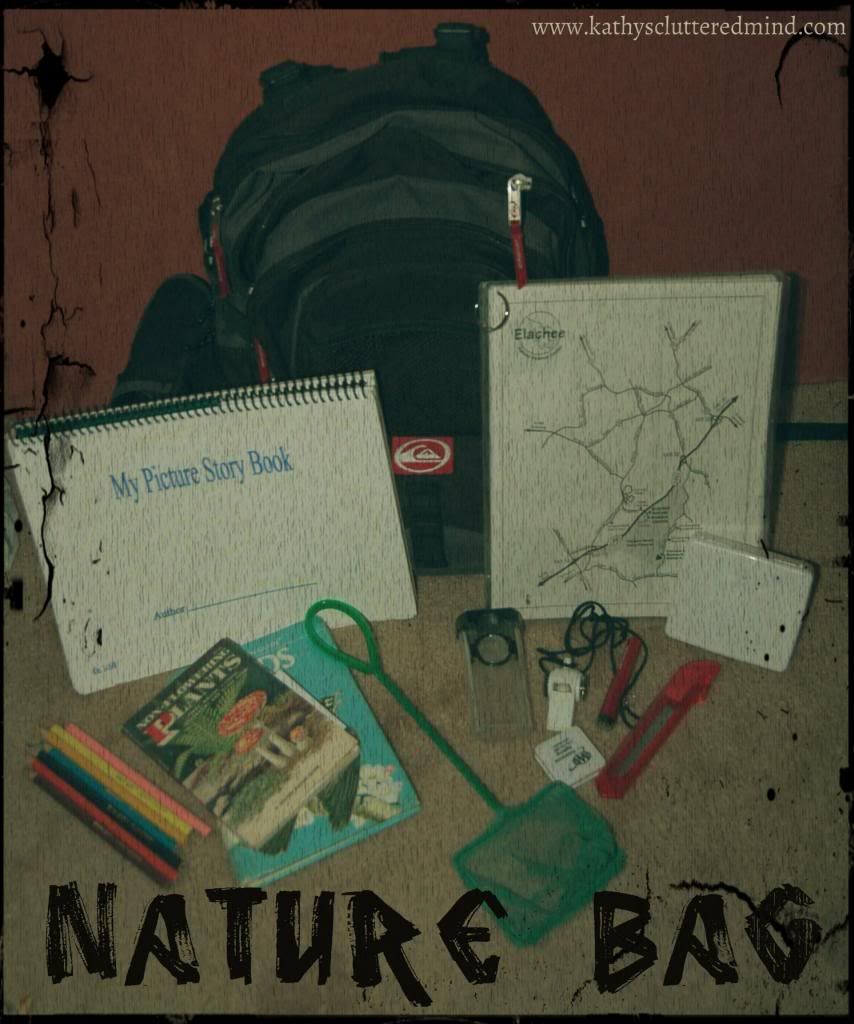
As you know we love the outdoors and we try to do several nature walks a month. Last week we visited our nature center for the monthly homeschool class. A few of the families went on nature walks afterwards and checked out the fabulous "Wildlife Watchers Packs" that the nature center provides for free if you are a member or for a small fee if you are not. Last year I decided to create our own "Nature Exploration Backpack." It is always ready to go (waiting in our coat closet) so I never need to worry about prepping for an outdoor adventure. A few of the homeschool moms were interested in knowing what I put in our backpack which is where the idea for this post came from. So here are the Top 10 Things Needed To Create Your Nature Exploration Backpack.
1) A durable back pack with lots of pockets, a place to store a water bottle. I love our Quick Silver bag with the built in cooler. It has tons of pockets, it's durable and it's comfortable. Our is similar to this one. 2) A first aid kit. If you have kids you know why you must have a first aid kit. Many a times we have needed to do some triage on a nature walk. 3) Various field guides. I do carry a few books and guides with us but I must confess my phone ALWAYS goes with us on our nature walks for a few reasons...pictures, field guides and GPS. My favorite field guide apps are from Audubon. They go on sale for 99 cents quite often so make sure you keep checking back if you don't want to pay full price. 4) A nature journal is a must have. Along with your favorite writing utensils (colored pencils, crayons, markers, etc). We also carry a glue stick too for affixing special items in our journals. We love our journals from Miller Pads and Paper.
5)Binoculars. 6) Maps of the area you are hiking. If you are at a nature center or State/National park then make sure you grab a map when you arrive. I actually have laminated maps for the places we frequent often and keep them in the bag so we don't need to worry about grabbing maps each time (plus it helps save paper). Oh that reminds you make sure you always have a compass too just in case! 7)Bug catchers and plastic ziplock bags. Both of these items are great to have in your bag so your young explorers can find specimens to examine up close or takes special treasures home. 8) Whistles for everyone going. Yes we always wear our whistles and both children know they are not toys. the whistles are to be used only if you are lost or need to get someone attention quickly. 9) Various tools like a small tape measure, box cutter, fish net and a multi tool. These items are great for exploring various things you may come across while out on your walk. 10) A camera. Now my camera is not always in my bag ready to go but we do have an old cell phone that takes pictures still that the kids keep handy in the bag.
Most of these items you may already have laying around the house. I spent only a few dollars (mostly at Dollar Tree) to create our backpack. Be sure to browse through all of our other Top 10 Posts!
Thanks for stopping by and have fun exploring nature! *Disclaimer - Many of the links found on my side bars and in my blog posts are affiliate links. Please note that prices indicated in the post are subject to change. As a result, I might get paid money and I will most likely spend the money on homeschool supplies.
B is for Birds, Butterflies, Bees, Blossoms and Booty all which we saw yesterday on our field trip to the Chattahoochee Nature Center.
The Chattahoochee Nature Center is an amazing place to take a field trip. There are great trails to hike, animals to observe, flowers to smell, geocaches to find and lots to learn. The staff is pretty amazing too! Yesterday we attended the homeschool class, which is offered one Monday a month. We also hiked, geocached, observed nature and worked in our nature journals.
The homeschool class this month was all about how animals play and why it is important. We learned what Ethology is and what an Ethologist does. Then we learned the 4 main types of animal play: predatory, exercise, social, cognitive. We also learned some statistical facts on how important it is for children to have at least 60 minutes of unguided play a day! Another great reason to homeschool, right? After class the kids got to well...play of course. We also got to check out one of the nature centers ambassadors who doesn't exhibit play behavior...a box turtle. The kids made some new friends which always makes me happy!
Then we introduced some of our friends to Geocaching! We ended up doing 3 Geocaches (YAY we now have 23) and scored some great Booty! While teaching our friends how to Geocache we got to see some pretty cools stuff. We saw some gorgeous Blossoms, Butterflies (hard to get pictures of them they are so fast), lots of Bees and a very cool Imperial Moth Caterpillar.
After Geocaching we visited the nature center and participated in Nature Exchange. Nature Exchange is a program where you can take in your found nature treasures and trade them for points. The center awards points based upon the condition of the items and your knowledge of the item. You can take in 3 items per visit. Then you can use your points to take home new treasures. There are tons of bins with cool things like rocks, dead insects, owl pellets, snake skins, shells, bones/skulls, fossils and more.
Then it was time to do some nature journaling. This week we started the Birds of Prey portion of our Bird Unit Study. We have been learning so much I actually think I may extend this unit study more than one month due to all the information. The kids observed a Great Horned Owl and Red Tail Hawk . We watched each one for about 15-20 minutes and discussed everything about them habitat, colors, body parts, sounds, etc. the kids drew pictures in their journals, wrote the name of the bird and then I wrote down the details they dictated to me. I absolutely love Gwyns Great Horned Owl picture. On the way out we made sure to check out the majestic Bald Eagles. We will most likely be going back to the center either this week or next week to observe a few more Birds of Prey.
Do you have a local nature center you LOVE? If so please leave a comment below, I am always looking to add NEW places to visit to our field trip list.
Tuesday we started our Bird Unit Study and the kids choose to start with the Anseriformes (Waterfowl) order since they saw a large group Canadian Geese on the side of the road on our way to speech therapy. We started our unit study by reading a bunch of books just like we always do. I find reading about what we are studying is the best way to start our days. The kids learn so much just from me reading to them.
We learned some great Bird terminology which we started adding to our Bird Lapbook:
Here is a FREE Duck Lapbook we used from Homeschool Share.
We also started listing the different Waterfowl Kinds:
-Swans
-Ducks (there are over 120 different types of Ducks)
-Loons
-Geese
After we read I decided to check out a pond I had heard about in a nearby business park. I didn't expect to find much but decided it was worth looking into and hoped we would at least see some Ducks. WOW was I surprised. It was a beautiful pond filled with all sort of fabulous nature waiting to be explored, including some Ducks.
Here are some of the wonderful things we explored:
We saw a little Snake, lots of Dragonfly's, hundreds of Mosquitoes, beautiful flowers and fuzzy plants. We also found 3 very cool Dragonfly molts (which will be added to our bug specimen board) and some Duck feathers (which will be added to our Bird Unit study exploration box). We also found some Fennel which we just had rub in between our fingers to smell. And of course we got to watch, feed and observe the Mallard Ducks. We discovered after reading our handy dandy Audubon Bird App (also available for iPhone) that some of them were most likely males but had begun molting. We got to watch them preening, dabbling and upending. And got to listen to them quacking.
We also found a Geocache we are up to 19 now! Want to learn more about Geocaching check out this article I wrote for another website.
Do you see the Cache? Gwyn found it right away when I told her we were close. Hint: It is made to look like its part of the light fixture.
But our field trip was not over. The kids spotted a wooden staircase leading to a paved trail adjacent to the parking lot. They begged to check it out. And we discovered a Lost Paradise. The paved trial which follows a small creek (which we will be going back to explore) is surrounded by very large hardwoods. The trail connects two of the office park buildings. This place is truly a hidden treasure. I am sure only a few Roswell Residents know this place exists.
I was super excited to find this place because it is within walking distance of our home expecially since we are down to one car YET again.
Here are the kids nature journal entry's for our trip. Rowyn's is the one on the left and is a Dragon Fly. Gwyns is a Duck. Gwyn did hers on a FREE notebooking worksheet that can be found over at the Crafty Classroom (there is one for bugs and animals too).
Have you ever discovered an awesome place close to home that you NEVER knew existed?