Showing posts with label National Park. Show all posts

Friday, June 10, 2016

Everglades Holiday Park Limited Time Coupon Offer #usfg

*This post may contain affiliate links. Please see my Disclosure Page for details.


We are really excited to be heading to Florida soon for our family vacation. We have some fun things lined up one of which is Everglades Holiday Park in Fort Lauderdale, FL. As you know we are a nature loving family so it should be no surprise that we would choose an airboat tour though the swamp as one of our activities. Everglade Holiday Park is home to the Gator Boys Alligator Rescue. The park has been in operation for nearly 3 decades and promises visitors a one of a kind, unforgettable experience. Be sure to follow us on Instagram to see photos from our Florida adventure.


At Everglades Holiday Park your family will glide across the River of Grass in a state-of-the-art airboat before taking in an alligator presentation performed by the Gator Boys from Animal Planet's hit TV series, where you'll learn all about the American alligator. Included with the adventure is 1 free group photo to remember your fun-filled day. Everglades Holiday Park has endless options for continued fun, including animal encounters, fishing, bike trails and more!

After our visit to the park we plan to hit up Everglades National Park so we can get in another National Park visit this year as we celebrate the centennial anniversary of the National Parks System.

Don't worry after our visit I will be sure to do a follow up post reviewing our experience. In the meantime check out the reviews on Trip Advisor.

Limited time offer - SAVE $4 Off Adult and $2 Off Child Airboat Tour, Gator Presentation & FREE Group Photo Ticket - Everglades Holiday Park -- home of the GatorBoys! Click here to obtain your coupon.

There's Only One Everglades, and Only One Way to See it!

Follow Everglades Holiday Park:

-Facebook
-Twitter
-Pinterest


Tuesday, April 12, 2016

These Are A Few Of Our Favorite Ruins (Georgia)

*This post may contain affiliate links. Please see my Disclosure Page for details.


One of our favorite ways to learn about history is through experiential experiences. And thankfully Georgia is full of historic ruins for us explore and observe. Every year we find more ruins to explore, and some are in the most unlikely of places, like in the middle of a busy city. Here are the top 10 ruins you need to visit in Georgia. Many of these ruins are mills that Sherman burned during his march through Georgia. These ruins are a fun, unique way to teach children about the history of Georgia, the Civil War, and life during the 1800 - early 1900's. We have visited all but 3 of these ruin sites (but the other 2 are on our list to visit soon).

Many of these sites are also located in State and National Park properties and you know I am a huge supported or our parks systems! Don't forget that April 16 through 24 is National Park Week! Many of the National Parks will have events going on like tours, etc. Check each parks website for more information!

  1. Sweetwater Creek State Park - Take a short hike down to the river to see the ruins of the New Manchester Manufacturing Company. These ruins might look familiar and that is because as several movies have filmed here, like the Hunger Games. This 5 story  textile mill which produced cotton yarns and cloth. It employed 60-70 people supported a town of 200 people. But on July 9, 1864 the factory buildings and the company store were burned to the ground by Union soldiers. The ruins are fenced in to preserve their history. During your visit be sure to ask about a Ranger led tour of the ruins. 
  2. Old Mill Park - Nestled in downtown Roswell you will find Old Mill Park which boasts several ruins. This is one of our favorite places to explore and splash around in the Summer. On the Old Mill Park side of the river which is the area closest to the parking area (owned by the city of Roswell) you can explore the 30-foot dam and millrace that was constructed on Vickery Creek in the mid-to-late 1830s to supply power for the mills. You can also check out the 1853 Machine Shop which is the only extant building left of the original 1839 Roswell Manufacturing Company. If you cross over the pedestrian bride to the other side of the river you will be on Chattahoochee River National Recreation Area property (NPS Property). Here you can find the ruins of Allenbrook, an antebellum home constructed between 1845-1857. And Laurel/Ivy Mill. This woolen mill was burned by federal troops in 1864, during the Atlanta Campaign. Women operatives of the mill were sent north after Roswell’s capture so that their skills would not benefit the Confederacy. The mill stood from about 1855 until 1864 and then was rebuilt by Barrington King and his son, James Roswell Kin. You can view a map of historical areas in Roswell here. 
  3. Sope Creek Park - This is another Chattahoochee River National Recreation area (NPS Property). The Marietta Paper Mill is an amazing site to explore. They are tucked into a high-end neighborhood just outside Atlanta. There are over 3 miles of hiking and mountain biking trails to explore. The multi-story ruins were destroyed by Union troops during the Civil War. Make sure you walk across to the other side of the river too to view a few more ruins. 
  4. Fort Mountain State Park - It's no secret we love exploring state parks and the ruins are definitely one perk. This is the second state park on the list that features some unique ruins. The mysterious ancient rock wall stands at the highest point of the mountain. The 855-foot-long wall is thought to have been built by early Indians as fortification against more hostile Indians or for ancient ceremonies.  It is definitely worth the hike.
  5. Cumberland Island NPS - Revolutionary War Hero General Nathanael Greene purchased land on Cumberland Island in 1783. Following his death, his widow Catherine Greene, constructed a four-story tabby home that she named Dungeness. Thomas Carnegie and his wife Lucy began building another Dungeness on the original foundation in 1884. The Carnegie's Dungeness burned in 1959 and today only the ruins remain on the site. 
  6. High Falls State Park - Visitors can hike along the river’s edge and through hilly forest to the remains of a hydroelectric power plant foundation.  In the early 1800s, this area was a prosperous industrial town with several stores, a grist mill, cotton gin, blacksmith shop, shoe factory and hotel. High Falls fell from prosperity in the 1880s when a major railroad bypassed it.
  7. Lullwater Park - Lullwater Park offers multiple scenic walking and running trail loops nestled within Emory University’s North Decatur campus near Atlanta. The Lullwater Trail passes the Lullwater House mansion, skirts Candler Lake and crosses a span bridge to explore a mill beside a tumbling spillway waterfall. The 1920's two-story powerhouse tower is constructed in a octagonal shape. It now stands open to the sky above, ivy climbing skyward across its stone walls.
  8. Arabia Mountain NPS - Not only can you find ruins at this fabulous National Park Site you can also explore the exceptional ecological wonders. As you explore the large granite outcrop be on the lookout for the evidence of quarrying activities. You will find industrial debris left on the mountain and abandoned structures once used by workers for storage, offices and shelter.  The ruins of quarry buildings are found interspersed throughout the park and metal spikes that were used to split the granite are still embedded in the rock.
  9. Rope Mill Park - Located just North of downtown Woodstock is a park with hiking trails, bike trails and historic ruins. For the best view of the ruins cross over the bridge, and take the unpaved hiking trail to the right. On the banks of the Little River are the remains of a grist mill from the late 1840s. In the 1870s it it evolved into a cotton and wool yarn mill. Eventually the mill produced cotton rope that was used for well rope and plow lines. The mill was constructed out of wood orginally and replaced by brick in 1903. In 1949 it closed in anticipation of the construction of the Allatoona Dam. 
  10. Ivy Creek Greenway - We stumbled upon this place by accident, well not really by accident we were on the hunt for a geocache that is in the area of the Woodward Mill ruins. You can reach these ruins by taking the Ivy Creek Greenway. There are multiple access points, we generally start at the Gwinnett Environment Heritage Center. I haven't found a lot of information on these ruins but it is a great and totally worth mentioning. The kids love taking a dip in the ater here. There are some nice water cascades and an old rusted water mill, which is all that remains of the Woodward Mill.

Sunday, February 28, 2016

Celebrating 100 Years Of The National Parks System

*This post may contain affiliate links. Please see my Disclosure Page for details.


Our family loves the National Parks system. Currently we are working through visiting all of the National Parks in our home state of Georgia, we have done 6 of the 15 so far. Did you know that this year the National Parks System is celebrating their 100 year anniversary in 2016? National Parks are not only beautiful and fun to visit they are super educational too. You can check out all the educational activities they offer in a previous post I wrote here.

Did you know right now every 4th grader can get a National Parks pass FREE through Every Kid In A Park?

So far this year we have celebrated the 100 year anniversary by completing the Junior Ranger program at the Martin Luther King Historic Site, watching the National Park Adventure IMAX at Fernbank Museum and by reading several amazing National Parks courtesy of National Geographic.


More about National Parks Adventure IMAX:
This amazing 40 minute documentary will definitely inspire you to go exploring. During the film you soar over red rock canyons, up craggy mountain peaks that touch the clouds and into other-worldly realms found within America’s most legendary outdoor playgrounds. The film is narrated by Robert Redford and follows world-famous climber Conrad Anker, adventure photographer Max Lowe, and artist Rachel Pohl as they hike, climb, and explore the wild places that belong to us all.

We watched the IMAX with about 40 of our homeschool friends and I think it is safe to say that both the moms and kids thoroughly enjoyed it. You could hear giggles, wows, gasps, ohs and ahs throughout the theater. After the movie I asked the kids what their favorite parts were. One said the prairie dogs, one said the bison, one said the ice/waterfall climbing and another said the guy riding bike on the rocks. As you can see it inspired everyone. One family actually hopped on a plane a few days later to head to the everglades (they were the winners of the book giveaway I had too for a copy of National Parks Guide - USA)

National Parks Adventure has also put together some great resources for educators and parents.


After the movie each child made an arrowhead necklace. Amazon had a great deal on agate arrowhead's. This craft was super simple too. Just choose some string and beads and


More about National Parks books from National Geographic:
  • Junior Ranger Activity Book - Calling all explorers and nature-lovers! From Acadia to Zion, discover all 59 of the United States' amazing National Parks in this jam-packed book of games, trivia, jokes, fun facts, and so much more, all inspired by the National Parks outdoor-based Junior Ranger Program. This book is guaranteed to keep the kids busy before, during and after your adventures! Check out the most amazing park habitats, plus awesome sights and animals you might see, from birds to bears. Fun facts are jam-packed onto every page, so kids learn something amazing about each cool park.
  • Buddy Bison's Yellow Stone - This adorable 32 pg paper back story book is the perfect way to learn about Yellow Stone. Join Buddy Bison and his two new friends as they explore the majestic Yellowstone National Park. Breathtaking photographs of Yellowstone serve as the backdrop for the wacky adventures of a curious pair of twins, Elena and Christopher, who are spending the summer with their aunt Rosa, a park ranger. This charming tale is sprinkled with helpful tidbits about the park, weird-but-true facts about the animals, and more fun facts kids adore. A comprehensive afterword offers a short history of the park and ways kids can get involved in parks preservation. 
  • National Parks Guide USA Centennial Edition - Happy 100th Birthday, National Parks! Join the 100 year celebration by reading all about these greatest of American treasures -- from Acadia to Zion -- in preparation for a parks visit sometime soon. This book is AMAZING. It is filled with color photos, information on animals, fascinating lists, fun facts, maps, cool things to do, conservation tips, and much more. It is the perfect travel guide for children as they travel to these amazing places.

Here are 25 FUN National Parks facts to hopefully spark your interest to explore:


  1. In GA there are 15 National Park sites. However we do not actually have an official National Park, but there have been talks to add Ocmulgee as Georgia’s actual 1st National Park. GA currently has Andersonville Historic Site, Appalachian National Scenic Trail, Arabia Mountain National Heritage Area, Augusta Canal National Heritage Area, Chattahoochee National Recreation Area, Chickamauga & Chattanooga National Military Park, Cumberland Island National Seashore, Fort Frederica National Monument, Fort Pulaski National Monument, Gullah/Geechee Cultural Heritage Area, Jimmy Carter National Historic Site, Kennesaw National Battlefield Park, Martin Luther King Historic Site, Ocmulgee National Monument, Trail of Tears National Historic Trail.
  2. So what do I mean by National Park? Well the National Parks system breaks up the more than 400 nationwide protected properties into several categories: National Parks, monuments, battlefields, military parks, historical parks, historical sites lakeshores seashores, recreation areas, scenic rivers and trails and the White House. Notice none of the national park sites in GA are actually parks yet. Sometimes national parks and national monuments are confused. National parks are chosen for their natural beauty, unique geological features, and unusual ecosystems.  Landmarks are chosen based on their historical importance to ALL Americans.
  3. The Native Americans believed that the greatest natural wonders belonged to no one and that they belonged to all. And it is that belief that the national parks were founded on. On the Roosevelt arch at Yellowstones north entrance is a quote from the act that created the park “For the benefit and enjoyment of the people”
  4. There are 51 million acres of National Parks. 
  5. President Theodore Roosevelt is credited with championing the establishment of the parks. But it was Ulysses S Grant that actually established the world’s first national park which was Yellowstone. It was created in 1872 and its caretakers were the the cavalry.
  6. However it was conservationist John Muir, who recognized the value of America’s wild places and worked towards finding a way to protect them. Muir explored many “wild” places, took people on guided hikes of these uncharted areas and wrote many articles on conservation. In 1890, there was only one national park - Yellowstone. Muir, however, wanted the area of the Yosemite region that was currently a state park to become a national one. Because of his many impassioned articles that were being published, much of the public was persuaded and wrote letters to congress in support of Muir's beliefs, and other outside groups also lobbied congress for the establishment of a national park. In March of 1903 Muir and Roosevelt met and went camping high above Yosemite Valley. Muir took full advantage of the opportunity, calling for Roosevelt's help to save the trees and preserve the natural beauty of the region. Roosevelt was very impressed with Muir, and the experience re-enforced his conservationist stance. Over the rest of Roosevelt's administration, he set aside 148,000,000 acres of forest reserves and the number of national parks doubled.
  7. In 1916, the National Parks Service was created to regulate the national parks. The National Park Service which overseas the National Park System is part of the US department of interior. The U.S. Department of the Interior is a Cabinet-level agency that manages America's vast natural and cultural resources. 
  8. The arrowhead is the symbol of the national park service. It is a reminder of the culture and history the national parks protect. Each image on the arrowhead represents something protected by the national parks. So what do you think the arrowhead itself represents? History and culture of our nation. What about the sequoia tree? The plants protected. What about the mountain? The scenery and land protected. What about the lake? The recreational values protected. And what about the bison? The wildlife protected.
  9. Buddy Bison is the beloved mascot for the National Park Trust.
  10. Wind Cave National Park is the first cave to be named a national park in the world. In addition to its length (currently sixth longest in the world), Wind Cave is known for its calcite formations known as “boxwork.” About 95% of the world’s boxwork is found in Wind Cave.
  11. The smallest national park is Hot Springs National Park.
  12. For a very long time poor Delaware, the country’s 1st state, was the only state not lucky enough to have either a National Park or National Monument. But in 2013 it finally got one! 
  13. Death Valley National Park, which has the lowest elevation in the U.S. at 282 feet below sea level. The highest point in North America is Mt. McKinley in Denali National Park, which stands at 20,320 feet tall.
  14. The Grand Canyon is both a record of history and source of mystery. The Colorado River running through the canyon cuts through metamorphic rock called schist, which is about 1.75 billion years old. However the beginnings of the canyon are much debated by scientists. Did the Colorado River carve the whole canyon or was there already an ancient gorge waiting for the new river millions of years ago?
  15. Crater Lake, the U.S.’ deepest lake and seventh deepest in the world, took 250 years of rain and snow accumulation to reach its current water level.
  16. The Appalachian Trail is a 2,185 mile long public footpath that traverses the scenic, wooded, pastoral, wild, and culturally resonant lands of the Appalachian Mountains.
  17. Mammoth Cave National Park is the longest cave system known to the world, with more than 400 mapped miles of caves.
  18. The Yellowstone Caldera, in Yellowstone National Park, is a super volcano that is responsible for three of the world’s six biggest volcano eruptions. It is on pace to blow about 100,000 years from now. More than 3 million people visit Yellowstone each year.
  19. National park visitors generate 100 million lbs of trash each year.
  20. The national parks contain at least 247 species of threatened or endangered plants and animals, more than 75,000 archaeological sites and 18,000 miles of trails.
  21. The largest living things in the world are in National Parks: Sequoia trees and Alaskan brown bears (the world’s largest living carnivores).
  22. Over 250 million people visit national parks each year.
  23. Although the distribution of National Parks is fairly spread out through the United States, the most concentrated area lies within the states of Colorado, Utah, and Cal­i­for­nia. 
  24. In February 2016 three new national monuments in the California desert: Mojave Trails National Monument, Sand to Snow National Monument, and Castle Mountains National Monument.
  25. Today there are more than 6,000 national parks in nearly 100 countries that support wildlife conservation and ecotourism.

Media to watch:
And if all that wasn't enough to get you running out the door to your nearest National Park check out these media resources too.
  • Ken Burn’s “The National Parks – America’s Best Idea” - this documentary  provides an in-depth look into the creation and meaning behind our National Parks. It explores the amazing views, the political history, and the intricate story that is behind all of our Nation’s favorite spots; this documentary will give you the wanderlust needed to pack up the tent.
  • Rock the Park - this show taps into America's love affair with our national parks. Our hosts, Jack Steward and Colton Smith, have made it their life's mission to explore every national park in this country. In the process, they come face to face with nature and push their physical limits as they go off the beaten path to discover some of the most awe-inspiring places on earth. The series is designed to inspire other Americans to seek adventure in the national parks.
  • YouTube National Parks Channel

Let us know where you are headed first for your National Parks Adventure!


Tuesday, May 12, 2015

Family Fun At State And National Parks And Historic Sites

*This post may contain affiliate links. Please see my Disclosure Page for details.


We love exploring State and National Parks and Historic Sites, not only in Georgia, but in other states too when we are traveling. Sadly they are a resource that a lot of people don't take advantage of enough. Both State and National sites work very hard to create events and activities for families to enjoy that are both fun and educational, but it has been my experience that people are not aware of all that these places have to offer. This post will explain some of our favorite events and activities. I hope that you are able to take advantage of some of these soon!

National Parks:
Most National Parks are very affordable to enter and only charge a parking fee which varies depending on the park. For most of the Georgia National Park sites are only a $3 parking fee. However there are several times during the year where entry into National Parks is FREE.

  • Junior Civil War Historian - One hundred fifty years ago, our nation nearly tore itself apart. Soldiers in blue and gray struggled on battlefields across the country and changed the face of the United States of America. Complete one of two options to become a Junior Civil War Historian. When done, you will understand how the Civil War shaped our nation's history and become part of a select group of young visitors who truly appreciate how important the Civil War is to us today.

  • Junior Ranger Program - The Junior Ranger motto is recited by children around the country; each taking an oath of their own to protect parks, continue to learn about parks, and share their own ranger story with friends and family.  The NPS Junior Ranger program is an activity based program conducted in almost all parks, and some Junior Ranger programs are national. Many national parks offer young visitors the opportunity to join the National Park Service "family" as Junior Rangers. Interested youth complete a series of activities during a park visit, share their answers with a park ranger, and receive an official Junior Ranger patch and Junior Ranger certificate. Junior Rangers are typically between the ages of 5 to 13, although people of all ages can participate.
  • Civil War to Civil Rights Trading Cards - This program started in 2011 to commemorate the 150th anniversary of the Civil War and to encourage families to visit multiple national parks. There are more than 500 cards from nearly 90 national parks in 31 states. To earn cards simply participate in programs, make good observations, or ask or answer questions. For an entire list of the National Parks that have cards click here (this is not the most current list because it is from 2012, but I couldn't find and updated one on their website). 
  • Passport To Your National Parks Program - America's National Parks are presented in one handy booklet with the Passport To Your National Parks program. The 104-page travelogue includes color-coded maps, pre-visit information, illustrations and photographs. It also includes a list of every national park area in the United States. Spaces allow you to collect the series of commemorative Passport stamps issued each year. You can order the booklet here or pick one up at a National Parks gift shop. 
  • Discovery Backpacks - Many of the National Parks offer Discovery Packs that you can check out for FREE at the visitor center. The backpack is filled with all materials that you will need to have a fun nature learning adventure with your kids. (not all parks offer these)
  • Monthly Events - Every month National Parks Sites across the country offer events and programs. Just check the website frequently. Also when visiting a National Park check to see if they have an app, Many of them now offer fun interactive app tours, like these which are great for kids.
If you can't currently travel, but are anxious to start learning about our countries National Parks then check out these fun virtual programs.
  • WebRangers - WebRangers is the online extension of the Junior Ranger program. It's a website for kids of all ages. If you love our National Parks, Historic Sites, and Monuments, then this site is for you.
  • Flat Ranger -  Flat Stanley by Jeff Brown is the story of a boy who is flattened by a bulletin board. Because he is flat, he can travel by mail (which costs a lot less than traveling by plane or car). Like Flat Stanley, Flat Rangers travel across the country by mail. They visit America's National Parks and send home pictures and information about all the places they see. (letter and templates can be found on the website)  There is also a traveling Clara Barton.
  • Sesame Street Explores National Parks - Travel with fun-loving Muppets Elmo and Murray from Sesame Street to two of America's most popular national parks in the new online series Sesame Street Explores National Parks. Watch educational videos and download lots FREE resources!
  • Archaeology For Kids - Do you like digging in the dirt? Finding things that are lost? Putting pieces together? Figuring out stories from clues? Learning about the past? These are all things archaeologists do—maybe you're one, too! 

Georgia State Parks and Historic Sites:
Georgia State Parks charge a $5 parking fee, If you plan to visit a lot of them I suggest the annual $50 pass. The cost for Historic Sites varies and generally runs between $3-$7 per person. However there are a couple times a year that the State Parks and Historic Sites offer FREE admission. Another option that enables you to visit for FREE is checking out the State Parks or Historic Site passes at your local library.

  • Junior Ranger and Get Outdoors Program - Children ages 6-12 will have fun learning in the outdoors as they work toward earning a Junior Ranger badge. By following the guidelines in the Junior Ranger Activity Book they will experience nature first-hand, explore Georgia's fascinating history and enjoy outdoor recreational activities. The experience builds as children work their way through three badge levels. For even more fun children can also earn a Get Outdoors Georgia Gopher Badge. Choose from a list of 16 different badge requirements that will get you outdoors and help you learn about nature.
  • Civil War Badge - Georgia State Parks and Historic Sites is offering a limited edition Civil War badge as we commemorate the 150th Anniversary of the Civil War. "Kids" ages 7-70 will have fun exploring sites in Georgia that were touched by this historic event. (limited time)
  • State Park GeoTour (State Parks and Historic sites) - Using a GPS or smartphone with a GPS app, you search 61 Georgia State Parks & Historic Sites locations around the state to discover hidden containers or “caches” which contain a small prize. (The coordinates to all caches are available online at Geocaching.com) You take a prize and then leave one for the next person. After signing the logbook to document your success, you go back online and share your experience.
  • First Time Camper - If you've always wanted to try camping, but weren’t sure how to begin -- we can help. Through our First-Time Camper program, you’ll get borrowed gear, expert advice, two nights’ accommodations and more...all for $50.
  • Monthly Events and Homeschool Days - Every month the Georgia State Parks and Historic Sites offer events and programs. Just check the website frequently or utilize the Pocket Ranger App.
  • Educational Resources for Teachers and Parents - view and download numerous resources including animal case studies. fieldtrip guides, educational videos, tour curriculum and more. 
  • Park Clubs and Challenges - Are you a mountain biker, canyon climber or paddler? Then your family will love these fun clubs and challenges. 

Did you know that during May and June, parks all across the country will be celebrating nature and outdoor recreation? Check out all these great upcoming ways to celebrate outdoor fun Kids to Parks Day (May 16), Great Outdoors Month (June), National Trails Day (June 6), National Get Outdoors Day (June 13) and the Great American Backyard Campout (June 27). 

What activity do you think your family will do first? Did I miss highlighting any family fun events or activities that these two places offer?

Tuesday, September 9, 2014

How To Spend A Day In Macon

*This post may contain affiliate links. Please see my Disclosure Page for details.


Remember our South GA Adventure a couple months ago? Well I still have a couple more things to share with you from our trip.

Macon, GA was the first stop during our adventure, but it won't be our last.This magnificent city has been on our list of places to explore for quite awhile and we are so glad we included it in our trip. This historic Southern city offers a lot of charm and something for every family

The history of Macon starts 17,000 years ago, but the city is most known for its musical heritage. Famous musicians including Otis Redding, Little Richard, the Allman Brothers Band, Joey Stuckey, Bo Ponder, Eddie Kirkland and Johnny Jenkins all called Macon home and helped make Macon the "Song and Soul of the South." Macon is the perfect place to spend a day or a week.

Macon History:
Macon's history begins over 17,000 years ago. Creek Indians inhabited Macon in the 18th century. But before them their prehistoric predecessors, the Mississippian's, built a powerful chiefdom (950–1100 AD) based on an agricultural village and constructed earthwork mounds for ceremonial, burial and religious purposes. Some of these still stand today. In the 1800's the city of Macon began its settlement and growth. Macon originally started out as Fort Hawkins and was located along the Ocmulgee River. The fort served as trading post for the Native Americans and colonists. It was also used as a military distribution point during the War of 1812 against Great Britain and also during the Creek War of 1813. During this time period settlers continued to flock to Fort Hawkins, which was later renamed Newton. In 1823 the city gained its name Macon. Due to its location along the Ocmulgee River the city thrived and was known as the Black Belt of Georgia, where cotton was the chief commodity crop. In 1843, railroad's helped increase marketing opportunities and contributed to the economic prosperity of Macon. During the Civil War, Macon served as the official arsenal of the Confederacy. Camp Oglethorpe, in Macon, was used as a prison for captured Union officers and enlisted men. Macon City Hall, which served as the temporary state capitol in 1864, was converted to use as a hospital for the wounded. Unlike many major Georgia cities Macon was spared during Sherman's  march to the sea preserving many of the historical buildings and artifacts in Macon. Macon continued to prosper and was even dubbed, "The Central City" in 1895 by the New York Times. Macon also has a long civil rights history that begins with slavery. Many famous African Americans from Macon helped contribute to and influence civil rights history. And Macon was one of the few Georgia cities that peacefully abolished segregation.

10 Places To Visit:
We only spent a day and a half in Macon so we were only able to fit in the Harriet Tubman Museum and Ocmulgee Mounds. The Museum of Aviation (located just outside Macon) we visited a couple years ago. The other places listed below are attractions we have on our list for future visits.

1) Tubman  Museum
Ever since I was a child I have always been fascinated with Harriet Tubman's life so I was really excited to visit this museum. The Tubman Museum was established in 1981 and is the largest museum in Southeast dedicated to educating people about the art, history and culture of African Americans. The museum is truly amazing and the dedicated staff and volunteers really enhance the overall experience. And in 2015 this museum is going to get even better, because they will be moving to a new location just down the street, which is 49,000 square feet. This larger space will allow them to have even more artifacts and artwork on display. This museum is a great place for children and adults of all ages. During our visit we also had the pleasure of meeting Dr. Andy Ambrose, the Executive Director of the museum.

The two story museum flowed quite nicely and in each section there was a staff member or volunteer available to discuss the pieces and answer any questions.


The first section of the museum included a large acrylic and oil mural that takes you on a voyage from Africa to America, no passport needed. As you travel through time you will learn about the feats of African Americans from past to present. After viewing the mural we learned more about Harriet Tubman and her amazing life through articles and artwork. Next we walked through the Black Artists of Georgia and African Folk Art exhibits. These exhibits were fascinating and very inspirational. My children loved the bright colors and use of mixed media.

Next we headed to the Inventors Gallery where we learned some amazing history. This exhibit featured select inventions that were created by African Americans. Many of these we had no clue about!  We then made our way upstairs to the Local History gallery. In this section we learned about the roots of the Tubman exhibits. There were artifacts and artwork from Macon and Georgia history, including materials associated with the lives of Ellen and William Craft. We had never heard of the Crafts and were in complete awe of their amazing story and journey. The last portion of the museum included an inspiring video about Ellen and William Craft which was narrated by their great, great granddaughter. The Craft story is a powerful story about courage, perseverance and faith.

Be sure to check out the amazing gift shop afterwards.

*This information is based on the current museum location.

2) Ocmulgee National Monument
Travel back in time and soak in the beautiful scenery and sounds at the Ocmulgee National Monument. First learn about the history of this amazing place in the museum. You will be greeted by a Ranger who will briefly tell you about the Paleo-Indian period during the Ice Age as well as the different cultures that occupied the land over thousands of years. Be sure to grab a scavenger hunt and Jr Ranger booklet from the Ranger. As you walk through the museum you will view artifacts and read in depth information about this historic area.

Afterwards head outside to step inside the continents only Earthlodge or climb to the top of the Early Mississippian temple mounds. There are a total of 7 mounds in the park. Throughout the park are informational placards to help you learn even more about the historic sites. You can also utilize the cell phone audio tour to learn even more.


From the top of the Great Temple Mound you can view downtown Macon and the wetlands. The view is absolutely breathtaking. There are several hiking and biking trails throughout the park including the Opelofa Trail, Bartram Trail, Walnut Creek River Trail and Heritage Bike Trail. You can also visit the site of only two Civil War Battles fought in Macon.

The Ocmulgee Mounds are FREE to visit. Pack a picnic lunch and stay all day. Be sure to visit the website for information on events, activities and monthly walks.

*If you are a gecoacher there are a couple that you can grab here. 

3) Museum of Aviation
The Museum of Aviation is FREE to visit and is a definitely a must see!! It is one of the largest aviation museums in the United States and a major Air Force Heritage, Exhibit and Education Center in the Southeast. The museum is located on U.S. Air Force property next to Robins Air Force Base, the Museum is the second largest museum in the U.S. Air Force. It is one of only ten aviation museums in the United States to be accredited by the American Alliance of Museums.

The majority of the staff at the museum are volunteers and many of them are veterans. And boy can you learn a lot just by talking to them. There are several buildings located on the 51 acre property which house the exhibits. Definitely plan on staying at least 2-3 hours. During your visit you will learn the history of various wars, touch planes and even fly planes.


The Museum has a large collection of approximately 85 historic U.S. Air Force aircraft, missiles and cockpits dating from a replica of an 1986 glider to modern aircraft in today’s U.S. Air Force inventory.

Major exhibits include:
- The 14th Air Force Flying Tigers
- The “Hump” Pilots of the China Burma India Theater during WWII
- The 50th Anniversary of WWII and the history of Robins Air Force Base
- The 483rd Bomb Group which flew B-17s out of Italy during World War II
“God Is My Co-Pilot” – the story of WWII Ace Brig. Gen Robert L. Scott
- “Down to Earth: - the 507th Parachute Infantry Regiment and the Air Invasion of
 Normandy
- The Tuskegee Airmen – A Proud Heritage
- The Korean War: The Forgotten War

After you visit the museum make sure you stop by the museum store to pick up some great souvenirs. Then enjoy a picnic lunch out at the picnic area. Also check the website for information on events, educational programming and more.

4) Allman Brothers Band Museum
At the Allman Brothers Band Museum at The Big House you can view the largest collection of the band's memorabilia in the country. The Big House became the place where members of the band, their roadies and friends and families lived until 1973. 

The Big House - Allman Brothers Band Museum
Image courtesy of Allman Brothers Museum and The Big House website.

5) Cannonball House & Museum
The Cannonball House and Museum is a Greek Revival mansion that was built in 1853. It was the only house in Macon that was struck by a cannonball during Stoneman's Raid on Macon in 1864. The home has been restored with furnishings of the period and is open to the public. Also on the property is an English garden featuring seasonal blooms. 40 minute tours are offered every 1/2 hour and include the main house and the original two-story brick kitchen and servants' quarters.

6) Georgia Sports Hall of Fame
Georgia's storied athletic heritage is featured in the 43,000 square foot Georgia Sport Hall of Fame. This museum offers educational and interactive exhibits that honor heroes from the state's top high school, collegiate, professional and amateur athletic fields such as record home run hitter Henry "Hank" Aaron and golf legend Bobby Jones.

Professional Sports corridor
Image courtesy of Georgia Sports Hall of Fame website.

7) Lake Tobesofkee Recreation Area
The Lake Tobesofkee Recreation Area is located just outside the city limits and offers families a year-round recreation area covering nearly 1,800 acres with 35 miles of shore line. there are 3 parks Clavestone, Arrowhead and Sandy Beach which provide white sandy beaches, swimming, fishing, boating, camping, water skiing, sailing and picnicking.

8) Hay House
In the mid 1800's, William Butler Johnston was the keeper of the Confederate treasure, but the mansion he built is the real treasure he left behind. The Hay House design was inspired by the mansions of Florence and Rome. The 18,000 sq ft home took 4 years to build. The Italian Renaissance Revival mansion is now a National Historic Landmark and open to the public to tour.
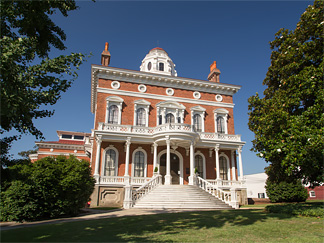
Image courtesy of Hay House website.
9) Museum of Arts and Sciences
"Discover The World - Explore The Universe" at the Museum of Arts and Sciences. This museum is the largest general purpose museum in Georgia and the only cultural institution in the state dedicated to both art and science. The museum was founded in 1956 in the basement of the old Weslevan Conservatory, the museum's 55,000 square-foot facility located on 14 acres on Forsyth Road in Macon. The museum offers a wide selection of art and science exhibits, a full-dome planetarium, mini-store and more. 

10) College Hill Corridor
If you are looking for a fun place to visit and play head over to the College Hill Corridor. This two square mile section of Macon connects Mercer University to Downtown Macon. Visitors can explore the Old South architecture, music history, and burgeoning culinary scene. But wait there's more you will also experience a vibe and a lifestyle, an urban renewal machine, entrepreneurial/maker's haven, bicycling & pedestrian streetscape, an educational oasis. 

It started as a senior capstone project by four Mercer students in 2007. At the time, Mercer was in a bubble, the surrounding neighborhoods were struggling, and dining and entertainment were limited. The city's Mayor and Mercer's President created the College Hill Corridor Commission and a movement was born. Thanks to an initial grant of $2 million from the John S. and James L. Knight Foundation, the College Hill Alliance became operational in the fall of 2009.


Screen Shot 2014-08-27 at 4.19.33 PM
Image courtesy of College Hill Corridor website.
More than $91 million in private and public investment later, the area is now an icon of urban renewal - and all that comes with it. Creativity is a constant with offbeat art projects, live theatre, festivals, urban hikes, a huge neighborhood Soap Box Derby, art house movies, free outdoor Second Sunday concerts, restored parks and green spaces, the city's top three house museums, art galleries, great dining, and nightlife all within walking and biking distance. Add bookend hotel accommodations - the Hilton Garden Inn right on the edge of campus, next door to the new Mercer Bears football stadium, and the luxurious 1842 Inn in the heart of the In-Town Historic District, and you've got an amazing new (historic) destination. 

Where To Eat:
There are tons of great places to eat in Macon. From soul food and vittles that kept Macon's Southern Rock musicians fed, to new farm-to-fork cuisine in a downtown landmark. But if you are only in Macon for a day you MUST stop by one of the Nu-Way Weiner restaurants. Nu-Way has been serving up their famous hot dogs since 1916. What started out as tiny stand on Cotton Avenue has turned into a chain restaurant that has won national recognition. Nu-Way is the second oldest hot dog restaurant in the USA.

Where To Stay:
If you need a place to stay check in at the Wingate on Northcrest Blvd. This is the perfect for hotel for business or leisure. The hotel is conveniently located off Interstate 75 and within minutes from major attractions. Check in was quick and easy and the staff at the Wyngate was very courteous. Overall the hotel was comfortable, clean, and affordable. The hotel is pet and smoke free which was a huge plus for us.

The room decor was very pleasing and featured dark woods and colors. We stayed in a double queen room which was very spacious and accommodated our family of 4 quite nicely. Everything you could possibly need to make your stay comfortable is included in the accommodations. The room had fast free Wi-Fi connection, a refrigerator, a microwave, a flat screen TV, a hair dryer and plenty of clean towels.

If you need to relax after a long day head out to the seasonal pool and whirlpool. There is also a free gym available if you need to stick to your workout routine during your trip. Start your morning off right with a free hot, robust breakfast. Vending and ice machines are also available. For guest convenience there is a business center located inside the hotel too.


Whether you are just making a pit stop in Macon or staying for a week there is definitely plenty to see and do!


 
Designed By: Wacky Jacqui's Designs